

Customer Experience ROI: How Modern Front Desks Drive Sales and Retention
Customer Experience ROI: How Modern Front Desks Drive Sales and Retention
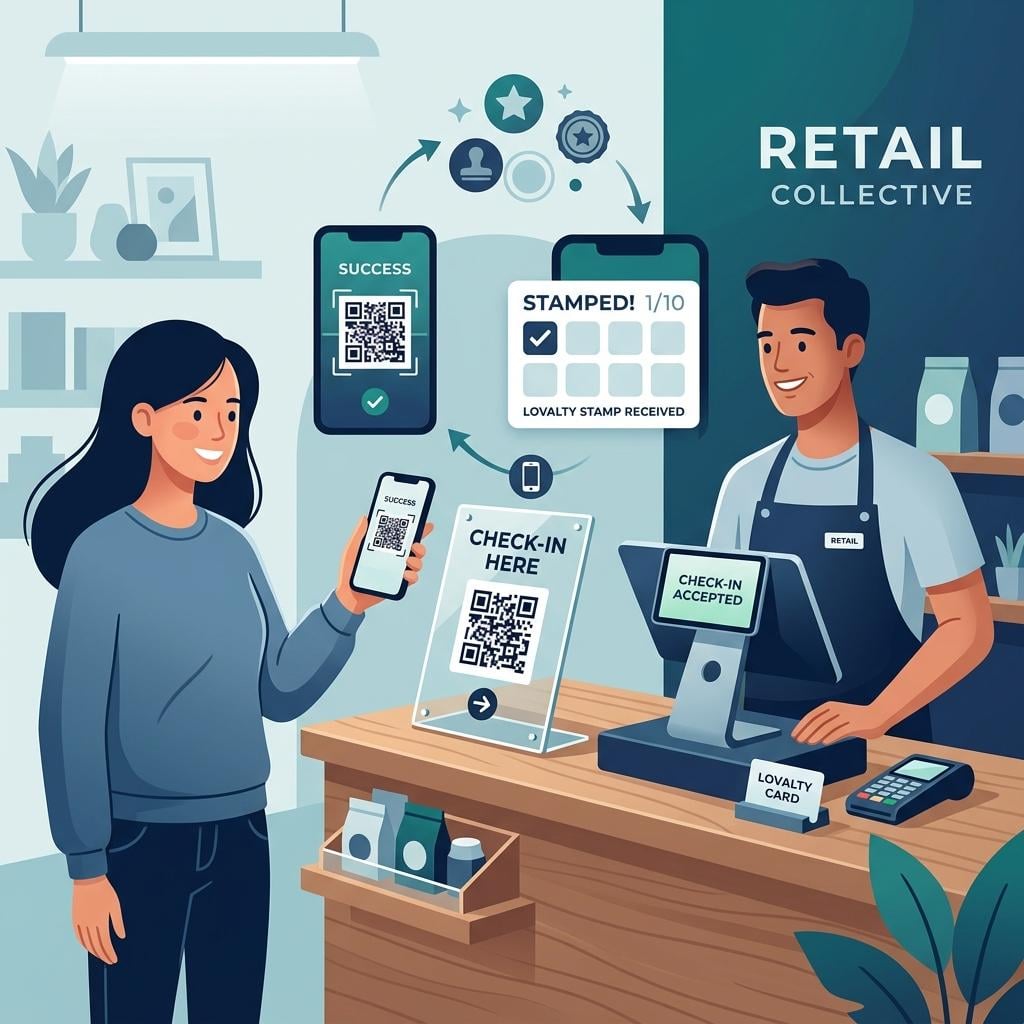
In the B2B and brick-and-mortar service industries, the reception lobby is often dismissed as a non-revenue-generating space. Businesses view it as a necessary operational cost rather than a strategic asset. However, customer experience (CX) benchmarks paint a completely different picture. The front desk is the very first physical touchpoint a customer, client, or job candidate interacts with. It sets the tone for the entire relationship.
According to research in queue psychology and consumer behavior, a negative lobby experience can lead to immediate customer churn and damage brand reputation. A study by the Harvard Business Review on customer service wait times revealed that customers who experience long or unmanaged wait times rate their overall service experience up to 50% lower, regardless of the quality of the actual service received.
To optimize this touchpoint, forward-thinking businesses are turning to modern lobby management solutions. By replacing slow, manual check-in clipboards with interactive check in system options and digital punch card programs, companies are unlocking significant return on investment (ROI) through improved front desk workflows, customer retention, and lobby operational efficiency.
This guide explores the psychology of waiting, details how modern lobby systems drive revenue, and provides a framework for measuring the ROI of your front desk.
1. The Psychology of Lobby Wait Times
To understand the value of a digital front desk, we must look at the math and psychology of queue management. David Maister, a leading authority on business administration, outlined several core principles of queue psychology in his seminal work, The Psychology of Waiting Lines. Two of these principles directly apply to lobby management:
- Unoccupied Time Feels Longer Than Occupied Time: When visitors stand in a silent lobby with nothing to do but stare at a clipboard or queue in a physical line, they feel every second. When they can scan a QR code and check in on their own phones, the check-in process becomes an active, engaging task, reducing perceived wait time.
- Uncertain Waits Feel Longer Than Finite Waits: Standing in a lobby without knowing when your host will arrive creates anxiety. A digital lobby system solves this by sending automatic SMS notifications. Once the visitor checks in, they receive an immediate confirmation, and the host receives an alert. The system can even send a follow-up text to the visitor: “Hi John, Sarah has been notified and will be down to meet you in approximately 3 minutes.” Giving visitors a clear expectation drastically reduces queue anxiety.
2. How Modern Front Desks Drive Customer Retention and Sales
A digital check-in system does more than just speed up the check-in process. It acts as an active marketing and retention channel.
Reclaiming Receptionist Time for High-Value Hospitality
When a receptionist is bogged down by manual administrative tasks—such as typing visitor names into spreadsheets, calling internal extensions to find hosts, and handing out safety booklets—they cannot provide high-quality hospitality.
By automating visitor logging via QR codes, receptionists are freed up to engage with guests, answer complex inquiries, and build rapport. In client-facing environments, this immediate, warm interaction directly impacts customer satisfaction scores.
Tapping the Power of the Digital Punch Card
For retail and service-oriented spaces (such as medical spas, coworking facilities, gym chains, and boutique clinics), lobby check-in is an opportunity to drive repeat business.
Traditional paper loyalty punch cards are frequently lost, damaged, or forgotten by customers. A modern VMS solves this by integrating a digital punch card program directly into the check-in flow:
- Frictionless Check-In: The customer scans the lobby QR code with their mobile phone.
- Automatic Points Collection: The check-in registers their attendance, automatically adding a stamp to their profile—without requiring them to download a separate mobile app or carry a physical card.
- Loyalty Triggers: When they reach a milestone (e.g., 10 check-ins), the system displays a reward coupon on their screen, driving immediate repeat sales and increasing Customer Lifetime Value (LTV).
According to customer loyalty studies, businesses utilizing mobile loyalty programs see an average 20% increase in repeat visit frequency and a 15% lift in average order value.
Capturing Accurate Customer Analytics
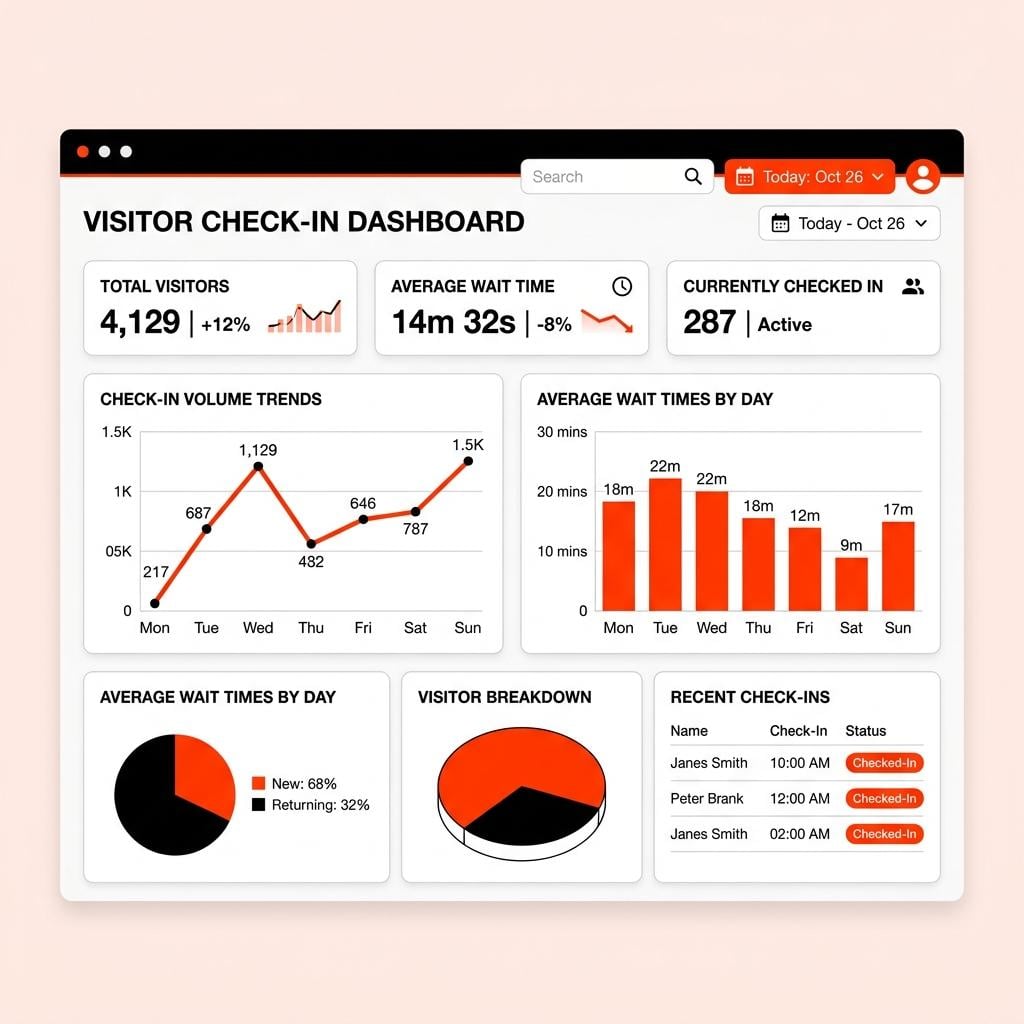
You cannot manage what you do not measure. A paper logbook makes it impossible to analyze lobby traffic patterns. A digital dashboard, however, tracks key operational metrics:
- Peak Check-In Times: Identify when your lobby experiences the highest traffic, allowing you to optimize staff scheduling.
- Average Wait Times: Measure the time elapsed between visitor check-in and host arrival, establishing clear internal Service Level Agreements (SLAs).
- Visitor Demographics: Track contractor ratios vs. customer appointments to optimize lobby space and resources.
3. Operational Comparison: Paper vs. Modern QR Lobby Flow
|
Operational Metric |
Manual Paper Clipboard |
Modern BYOD QR System |
|
Check-In Capacity |
1 person at a time (Creates lines) |
Unlimited parallel scans (Zero queues) |
|
Host Alert Method |
Receptionist must call phone extension |
Instant automated SMS & Email alerts |
|
Wait Time Tracking |
None (Impossible to audit) |
Exact database timestamp tracking |
|
Loyalty Integration |
None (Or manual stamps) |
Integrated digital punch cards on screen |
|
Lobby Congestion |
High during morning peak |
Zero (Guests check in from their seats) |
4. Calculating the ROI of Digital Lobby Management
To justify the transition to a digital lobby system like SigninLink, operations directors can use this simple ROI calculation model based on labor savings and visitor throughput.
Scenario: A corporate office hosting 50 visitors/contractors per day
- Manual Cost: On average, a receptionist spends 4 minutes per visitor greeting them, having them sign logs, locating the host, and filing paperwork. $$\text{Daily Labor Time} = 50 \text{ guests} \times 4 \text{ minutes} = 200 \text{ minutes} \text{ (~3.3 hours/day)}$$ At an average receptionist wage of $20/hour, manual check-in costs $66.60 per day in administrative labor.
- Digital Cost: With a QR BYOD check-in system, the guest performs the input, and the cloud handles alerts. The receptionist spent time drops to under 30 seconds per guest. $$\text{Daily Labor Time} = 50 \text{ guests} \times 0.5 \text{ minutes} = 25 \text{ minutes}$$ This costs $8.33 per day in labor.
Net Daily Savings: $58.27. Over a standard 250-day working year, this equates to $14,567.50 in saved labor costs per lobby, which can be redirected to high-value administrative tasks.
5. Implementing a CX-Focused Lobby Flow
To maximize customer experience and conversion rates, follow these setup steps:
graph LR
    A[Visitor scans QR] --> B[Frictionless Form]
    B --> C[Instant Host Notification]
    C --> D[Digital Loyalty Stamp]
D --> E[Satisfied Customer Check-in]- Optimize the QR flyer placement: Print the QR code flyer on high-quality, branded signs and place them at multiple locations (e.g., reception desk, lobby tables, entry glass) to avoid crowding.
- Minimize input fields: Only ask for essential information. Every extra field decreases check-in conversion and increases friction.
- Enable SMS alerts: Ensure your staff profiles are updated with correct mobile numbers so host notifications are delivered instantly.
- Display custom branding: Customize your digital sign-in page with your company colors and logo, reinforcing brand authority the moment the visitor scans the code.
Conclusion
The reception lobby is the physical homepage of your business. In a competitive market, maintaining an unorganized front desk with paper clipboards or slow, expensive iPad kiosks is a missed opportunity. Implementing a modern QR-based lobby management system like SigninLink protects your business security, streamlines operations, reduces wait-time anxiety through automated notifications, and drives customer retention with integrated loyalty tools.
Modernize your physical space. Sign up for a free trial of SigninLink and design a premium, secure check-in experience for your guests in under five minutes.

