

The Ultimate Guide to Green Lobby Management: How Paperless Systems Save Money and Forests
The Ultimate Guide to Green Lobby Management: How Paperless Systems Save Money and Forests
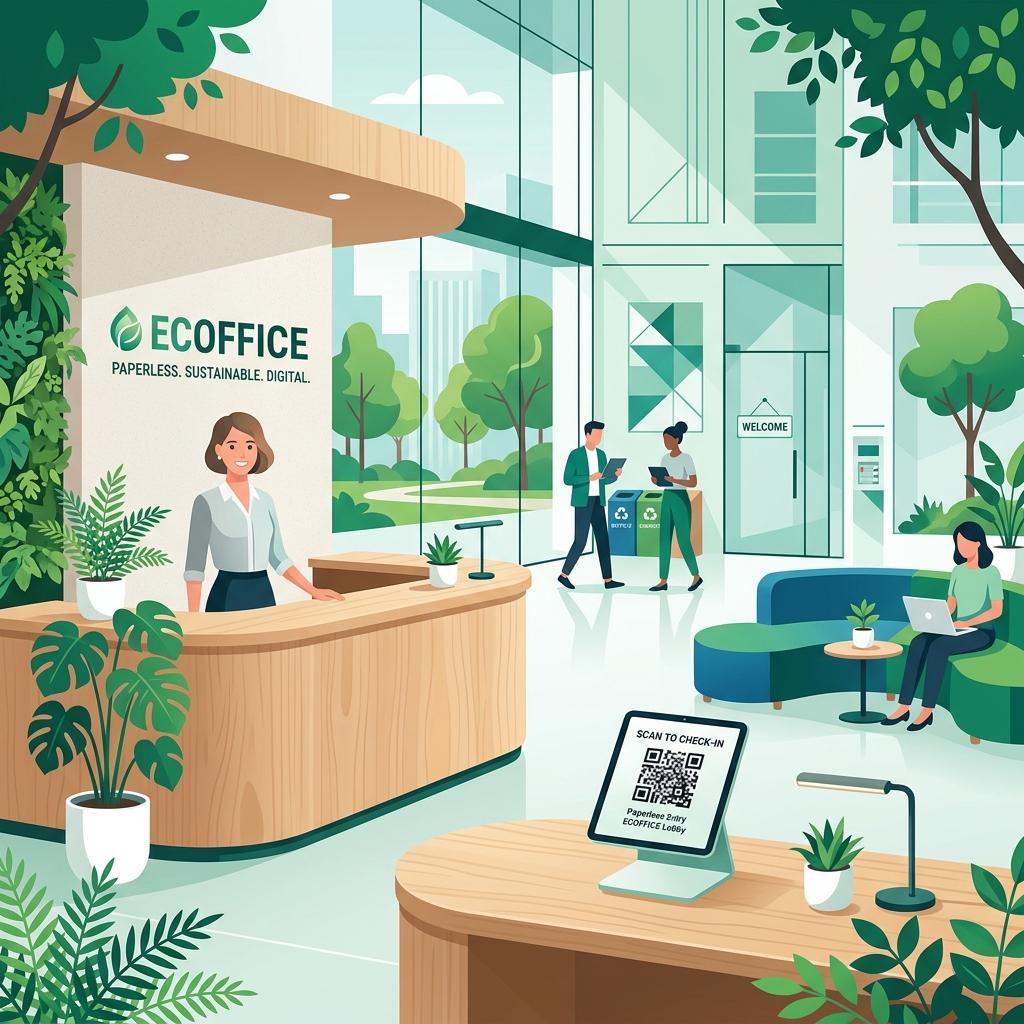
In the modern corporate landscape, sustainability is no longer just a marketing slogan or a line item in an annual ESG (Environmental, Social, and Governance) report. It is a core operational requirement. Corporate clients, investors, and talent are increasingly auditing the environmental impact of the companies they do business with.
One of the most visible and unnecessary sources of waste in a corporate office is the reception desk. Every day, thousands of lobbies worldwide require guests, contractors, and job candidates to sign physical paper logs, sign paper non-disclosure agreements (NDAs), and read printed safety pamphlets.
By transitioning to a digital visitor registration system, operations officers and facility executives are realizing a double benefit: reducing carbon footprints and unlocking substantial financial savings. This guide provides an in-depth audit of office paper waste, demonstrates the mathematical cost savings of paperless lobbies, and outlines a step-by-step framework for implementing sustainable lobby management workflows.
1. The Environmental Cost of the Traditional Visitor Log Book
To understand the impact of paperless lobby management, we must first examine the environmental footprint of physical paper production and waste.
The Lifespan of a Paper Visitor Log
According to environmental resource audits:
- A single standard tree produces approximately 8,333 sheets of high-grade copier paper.
- The production of one ton of office paper consumes 24 trees, 19,077 gallons of water, and 4,000 kilowatt-hours of electricity.
- Every sheet of paper printed in an office environment generates approximately 4.7 grams of CO2 equivalents (including manufacturing, shipping, and printer energy).
For a medium-sized facility hosting 100 visitors per day:
- Using a physical visitor log book (where check-in, NDA, and health declarations are printed on separate sheets) consumes approximately 3 sheets of paper per visitor.
- This equates to 300 sheets of paper per day, or 75,000 sheets of paper per year.
- This single lobby consumes 9 trees and generates approximately 352.5 kg of CO2 emissions annually—just for front desk logging.
When scaled across multiple facilities or large enterprise offices, the environmental cost of maintaining a manual reception desk becomes significant.
2. The Financial Equation: Calculating the Real Cost of Paper Lobbies
Many operations directors evaluate the cost of paper check-in solely by the purchase price of paper sheets. However, the true cost of paper in a lobby is much higher when factoring in printing hardware, ink cartridges, storage cabinets, and administrative labor.
The “Total Cost of Paper” Formula
To calculate the true cost of a paper-based lobby, operations teams use the following cost model:
$$\text{Total Paper Cost} = \text{Paper Sheet Cost} + \text{Printing & Toner Cost} + \text{Archiving & Retrieval Cost} + \text{Disposal/Shredding Cost}$$
Let’s calculate this for a corporate lobby hosting 20,000 visitors per year:
- Paper Sheets: 20,000 visitors $\times$ 3 pages = 60,000 sheets. At $8 per ream (500 sheets), the raw paper cost is $960.
- Printing & Toner: Average laser printer cost (toner and hardware depreciation) is $0.05 per page. 60,000 pages $\times$ $0.05 = $3,000.
- Archiving and Storage: Signed NDAs and liability waivers must be retained for at least 3 years for legal compliance. Storing 180,000 sheets requires physical filing cabinets. The cost of lobby real estate for cabinets, folders, and labor to manually file and retrieve documents is estimated at $2,500 annually.
- Security Shredding: Visitor logs contain PII. To comply with privacy laws, expired records cannot simply be thrown away; they must be securely shredded. Professional shredding services cost approximately $600 annually for this volume.
Total Annual Cost of Paper Lobby Flow: $7,060 per lobby.
By transitioning to a hardware-free, mobile-based QR check-in system, this recurring cost is reduced to the software subscription fee, resulting in immediate operational savings.
3. Operational Comparison: Environmental and Financial Impact
|
Impact Metric |
Traditional Paper Lobby |
Paperless BYOD QR System |
|
Paper Consumed |
3 sheets per visitor average |
Zero |
|
Annual CO2 Footprint |
~352.5 kg per lobby |
Zero (Paper-related emissions) |
|
Annual Material Cost |
High (Paper, toner, cabinets) |
Low (Software subscription only) |
|
Filing & Archiving Labor |
Manual filing (Slow & error-prone) |
Automated secure cloud storage |
|
Space Required |
Physical cabinets in prime office space |
Zero (Stored in secure cloud database) |
4. Step-by-Step Framework to Digitalize Your Front Desk
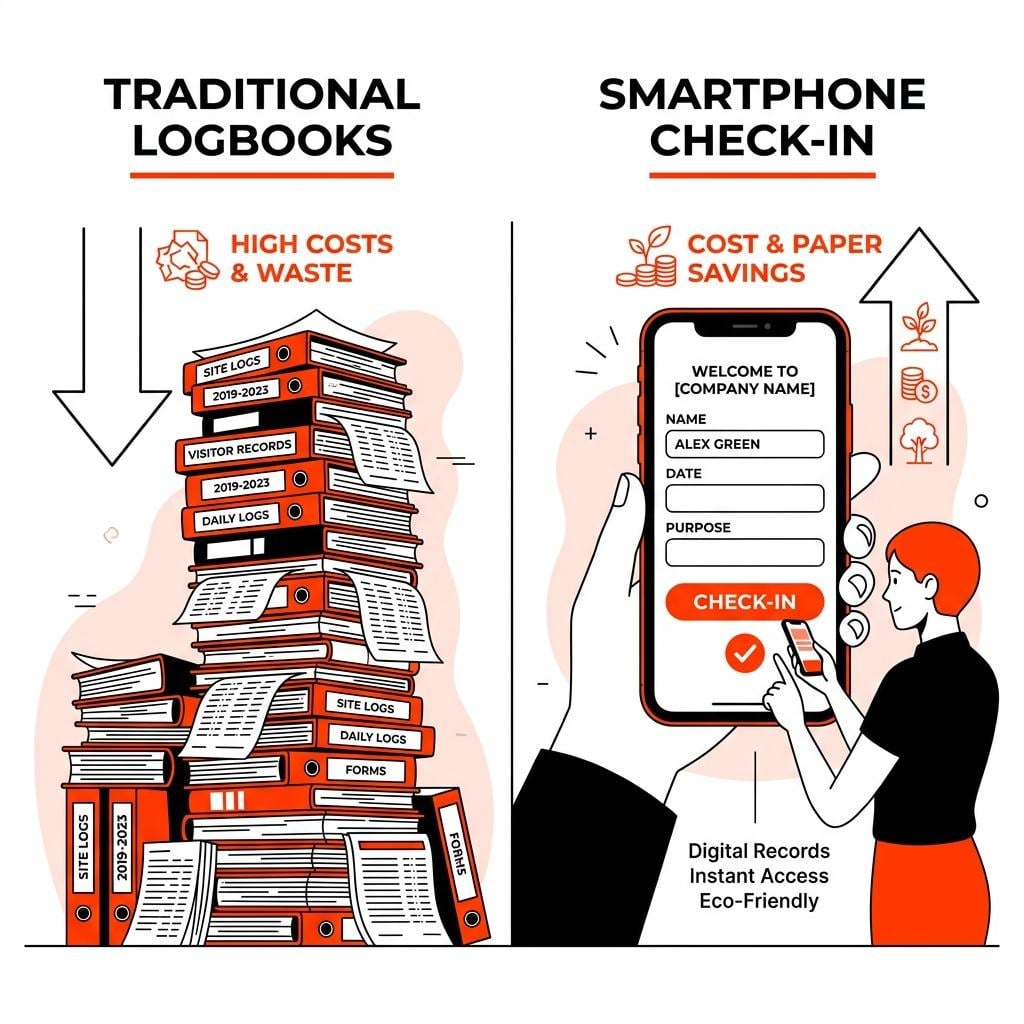
Transitioning to a green lobby management system like SigninLink can be completed without complex IT overhead or expensive hardware purchasing.
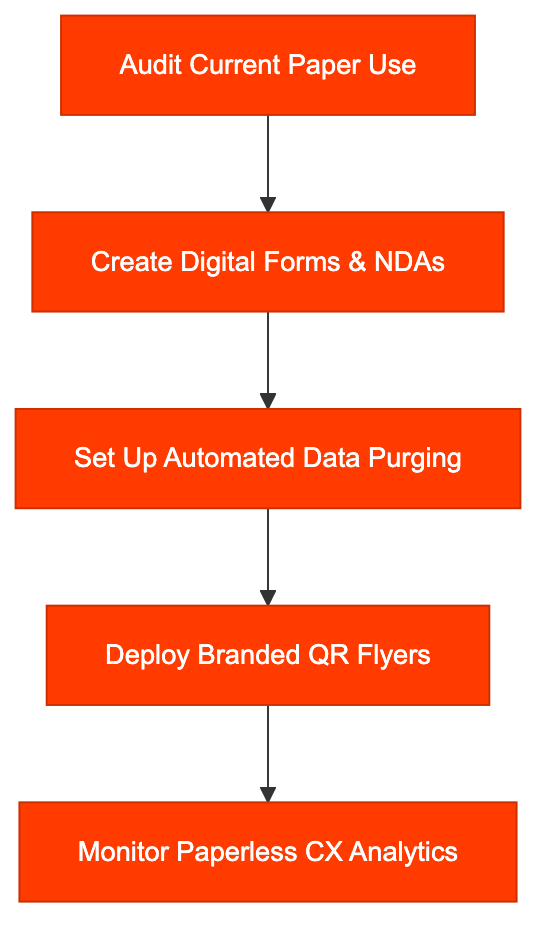
Step 1: Audit Your Current Paper Consumption
Map out every form a visitor is currently asked to fill out or read. This includes visitor logbooks, non-disclosure agreements, safety briefings, and health declarations.
Step 2: Convert Files to Digital Web Forms
Upload your PDF agreements and NDAs to your visitor management dashboard. Configure the custom fields to match the exact questions from your old paper sheets.
Step 3: Implement Automated Retention and Purge Rules
Configure the cloud storage settings to automatically delete or archive visitor data in compliance with your industry’s data retention regulations, eliminating the need for physical storage or shredding.
Step 4: Position Contactless QR Signage
Print your custom QR code flyers on high-quality, recyclable materials and place them in visible locations in your lobby. Guests scan the code with their smartphone cameras, completing the sign-in and document signing process in their mobile browsers.
5. Driving Green Brand Value
In addition to direct cost savings and carbon footprint reduction, a paperless lobby is a powerful brand asset.
- A Modern First Impression: When a client enters your lobby and scans a QR code to check in, it communicates that your organization is tech-forward, efficient, and environmentally responsible.
- Visualizing ESG Commitments: You can customize your digital sign-in page to display a message highlighting your green efforts: “Thank you for helping us stay green. By using our paperless check-in, you saved another tree today.”
- Recruiting Alignment: Studies in HR metrics show that over 70% of job seekers prefer to work for companies with strong environmental commitments. A paperless check-in process reinforces this commitment to candidates the moment they arrive for an interview.
Conclusion
Lobby digitalization is one of the easiest and most cost-effective ways for operations officers and facility managers to drive operational efficiency, reduce waste, and meet corporate sustainability goals. Replacing the traditional paper visitor log book with a mobile-first QR system like SigninLink eliminates paper and printing overhead, reclaims valuable office space, protects guest data privacy, and saves thousands of dollars annually.
Transform your reception lobby into a clean, green, and secure gateway. Try SigninLink for free today and eliminate paper check-in files in under five minutes.

